







The Gamification of Sleep: Do Sleep Scores Really Matter
Thanks to smartphones and new technology, we’ve never had more data about our bodies. And somewhere along the way, we started turning them into scoreboards. We watch our steps, count our calories, and try our best to close those darn rings every day.
Sleep is no different. We roll over in the morning, reach for the phone, and there it is waiting for you: a number that grades us the one thing our body should naturally know how to do. We've turned shut-eye into something akin to a sport, complete with stats, streaks, and the pressure to beat yesterday’s. score.
The gamification of sleep is increasing in popularity, too. A 2023 survey from the American Academy of Sleep Medicine found that more than a third of U.S. adults track their rest with some kind of device.
So, the million dollar question: do those scores actually matter? Our honest answer is a little bit yes, and a little bit no. We break it all down below.

The Case for Keeping Score.
Most of us couldn't honestly say how long we slept, how often we woke up, or whether last night was any better than the one before. A sleep score takes all that guesswork and turns it into something concrete that you can act on. It encourages you to pay attention, which is how better sleep habits start.
The idea behind a sleep score isn't new, either. Clinicians have used sleep diaries for decades, and self-monitoring has long been a cornerstone of behavioral sleep medicine. The numbers back it up as well. In that same 2023 survey, most people who tried a sleep tracker said it helped, and a majority changed something about their habits based on what they learned.
Once you start paying attention, the patterns start to surface on their own. If you notice your numbers nosedive on the nights that you scroll on TikTok at midnight, that's the real value of a score. It connects cause and effect that memory alone often can’t.

Turns Out, There Is No Magic Number.
Here's the catch with keeping score: stressing out about your sleep number can interfere with the very thing it's trying to measure. Researchers even have a name for this phenomenon. In a 2017 study, a team of researchers coined the term "orthosomnia" for people so fixated on perfect sleep that it actually kept them awake. Some were even spending extra time in bed to boost their numbers, which only made their sleep worse.
While tracking your sleep is usually a net positive, it's worth remembering that consumer sleep trackers aren't medical devices. Their accuracy can vary from one night to the next, and one rough score isn't a final verdict on how well you're sleeping. Sleep patterns shift with stress, travel, the seasons, a noisy neighbor, a snoring partner, or other life circumstances. If you start to treat every nightly number as pass or fail, you might be doing more harm than good to your sleep.

Striking the Perfect Balance.
One night is just a data point, but thirty nights is a pattern. A single sleep score won't tell you much on its own, but a few weeks of them will show you what's helping your sleep and what's harming it.
Patterns can also point you toward what you should change. You already know the basic advice: keep your room cool and dark, somewhere around 65 to 68 degrees, and dim the lights well before bed so your body can produce melatonin. What none of that tells you is which change will make the biggest difference for you. The only way to find out is to try one, give it a week or two, and watch where your numbers land. Nudge the thermostat down and see if the week reads better. Dim the lights an hour earlier and see if the 3 a.m. tossing eases up. Over a few weeks, the answers should emerge.

Consistency is Key.
Instead of chasing a perfect sleep score, we recommend chasing one thing: consistency. Going to bed and waking up around the same time, even on weekends, seems to do more for your body than any single flawless night.
A 2024 study in the journal Sleep that followed more than 60,000 people found that how regularly someone sleeps predicts long-term health even better than how long they sleep, with the steadiest sleepers facing a substantially lower risk of early death than the most erratic ones. So track your numbers if they help. But if you only change one thing, make it your schedule. A steady rhythm is what actually pays off.

How Ozlo Can Help.
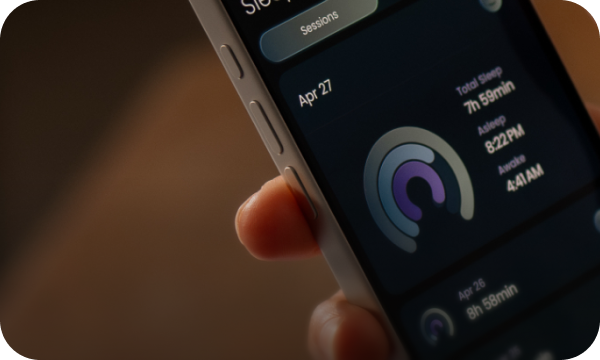
Of course, keeping a sleep journal by hand can get tedious. This is exactly what Ozlo Sleep Patterns is built for. It tracks things like how long you slept, how consistently you stuck to your schedule, and how efficiently you turned your time in bed into real rest.
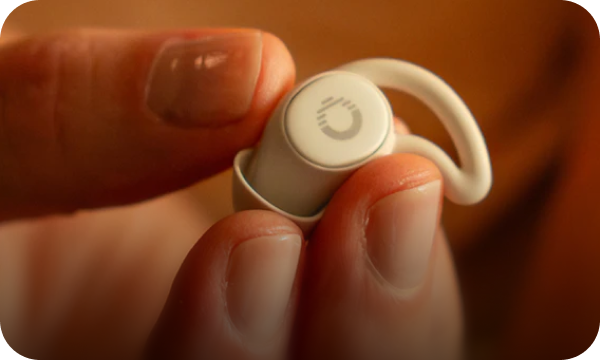
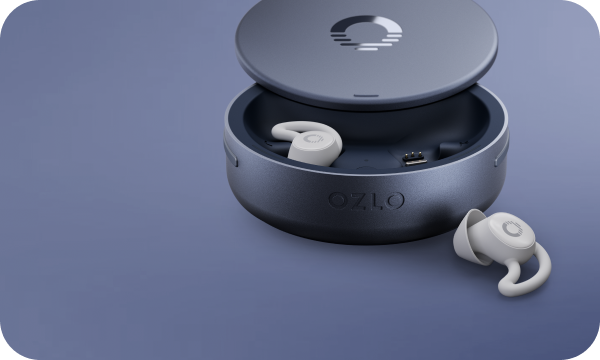
Ozlo Sleep Patterns also keeps track of what's going on around you while you sleep. Your Sleepbuds and Smart Case pick up on the noise, light, and temperature in your room, along with your movement and breathing. When something tries to interrupt your night, Ozlo Sleepbuds mask it so you stay asleep.
Over time, all of that adds up to patterns and data you can actually use, so you can see what's working, fix what isn't, and make changes that last.
In closing, it’s important to remember that the goal isn’t chasing a perfect score. Great sleep is built night after night, one better night at a time. So watch the patterns, give yourself a break after a rough night, and trust the overall trends more than any single number. And with all that said, sleep well!


